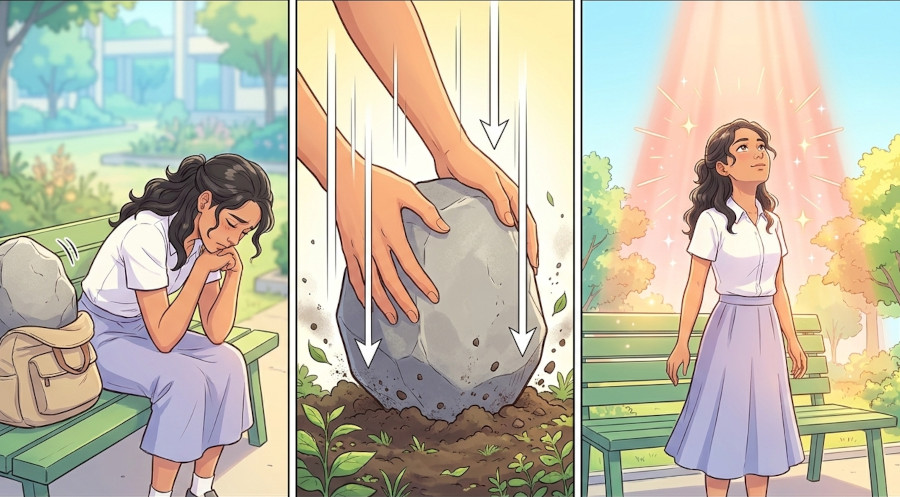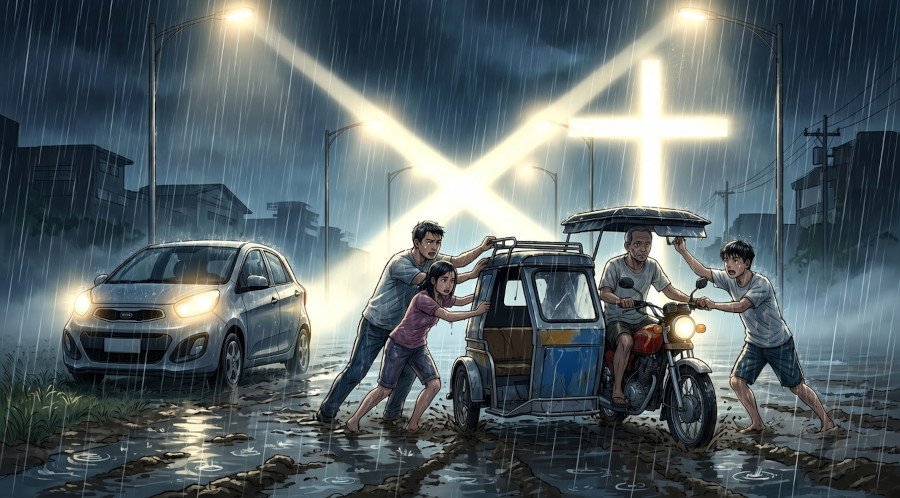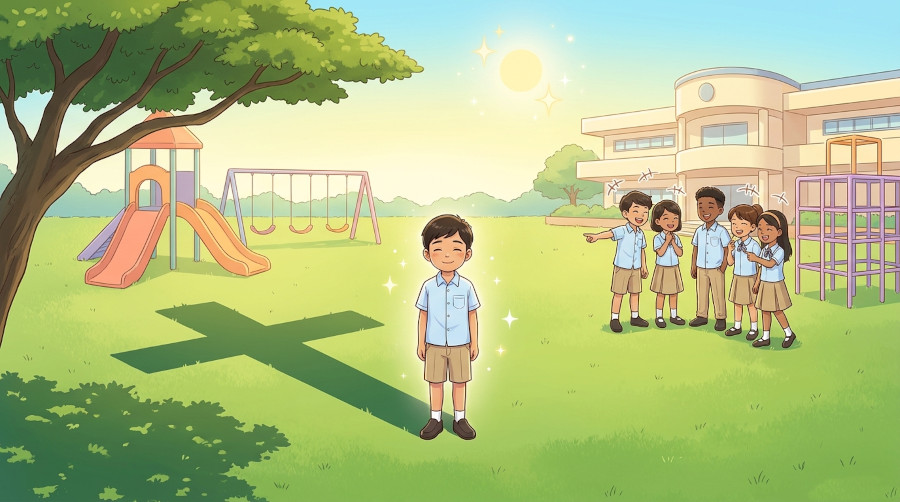
Ask any experienced teacher and you will hear the same concern: many boys today are adrift. They are restless in class, quick to give up, and drawn to screens and to online voices that offer them a cheap, angry version of manhood. Many fathers feel it too. They want their sons to be strong without being harsh, and gentle without being weak, but they are not always sure how to get there.
This is not only a feeling. In the Philippines, the Philippine Institute for Development Studies (PIDS) has found that more boys than girls are left behind in basic education. Abroad, the pattern is the same. In the United States, women now earn nearly six in ten college degrees. Something is happening to boys, and it is worth understanding before we can respond to it.
What happened to boys?
Thinkers from different backgrounds have tried to explain it. Two voices have been especially influential.
Jordan Peterson: "A good man is responsible, and dangerous for good"
The Canadian psychologist argues that much of modern culture has come to treat ordinary male traits (competitiveness, risk-taking, the drive to build and to fight) as problems to be fixed rather than strengths to be trained. When boyish energy is treated as something bad in itself, he says, boys do not become gentler. They become demoralized, and their drives come out in worse ways.
His answer is not aggression but responsibility. He urges young men to take on as much responsibility as they can bear and to grow strong enough to carry more, because that is where meaning is found. His picture of a good man is the shepherd: someone with real strength who uses it to protect the weak. In his book 12 Rules for Life, he warns parents against removing every risk from a boy's life. Boys, he writes, grow by testing themselves at the edge of danger.
Katharine Birbalsingh: "Leave boys without good men, and they will find bad ones"
The headteacher of Michaela Community School in London, often called "Britain's strictest school," spoke directly to this in October 2026, in an episode titled "Schools Stamped Out Masculinity. Andrew Tate Is the Result." Her argument: for years, schools and the wider culture have told boys that masculinity itself is the problem. Toughness, competitiveness, and courage get lumped together with violence and misogyny, and ordinary boyish roughhousing is treated as a warning sign. Online influencers like Andrew Tate, whom she calls vile, did not win boys over by accident. They stepped into a vacuum that the adults left empty. As the episode puts it: "Leave boys without good men to follow, and they will find bad ones."
Her point is not that boys should be made less masculine, but that they should become, in her words, "good versions of being traditionally masculine." Men commit most murders, she admits, but men are also the ones who run into danger to save others, like the firefighters of 9/11 and the soldiers who fought the Nazis. "It's almost like what matters is what you do with masculine attributes," she says.
Her school's answer is not to soften boys but to structure them: clear rules, high standards, good manners, gratitude, and no mobile phones. Its students, many from low-income homes, have posted some of the strongest progress scores in England.
Other writers add to the picture. Richard Reeves, author of Of Boys and Men, points out that boys mature later than girls, especially in the parts of the brain that handle self-control and planning, while most schools reward the early maturity that girls tend to show. And as writer Stella O'Malley noted in 2026, millions of boys are growing up without a father at home, leaving a gap that online influencers rush to fill.
When boys are taught that being a boy is the problem
Over the past decades, a strong current of thinking in Western culture, often called "woke" by its critics, has treated differences between boys and girls as mostly invented by society, and has spoken of traditional masculinity mainly in terms of its dangers. Critics like Peterson argue that this has led, little by little, to the feminization of boys: classrooms, media, and even homes that quietly expect boys to behave like girls, and treat them as broken when they don't.
You can see it in small ways. A boy who needs to move is labelled a behavior problem. Rough play is banned outright, and one widely shared razor commercial even presented boys wrestling as bullies in the making, an example Birbalsingh herself points to. Competition is downplayed so no one feels bad. The phrase "toxic masculinity" is used so often that some boys conclude masculinity itself is toxic. And grown men, unsure what is expected of them, hold back from leading at home, at church, and in the community.
A fair word of caution
Not everyone agrees with this diagnosis. Many researchers point out that boys and girls overlap far more than they differ, and that some "boys will be boys" thinking has excused real harm. Those concerns deserve to be taken seriously. Bullying, cruelty, and disrespect toward women are not masculine; they are sin. But the answer to bad masculinity is not no masculinity. It is good masculinity. Or as Birbalsingh asks about the men who gave their lives running into burning buildings: "Are we really saying goodness, that's so toxic?"
This is why parents and teachers need to understand what is happening before they can respond well. Boys and girls are equal in worth before God, but they are not identical. Treating them the same way does not always mean treating them fairly. A boy who is never allowed to be a boy rarely grows into a man.
What true manhood looks like
Scripture gives a picture of manhood far richer than either the online "alpha male" or the timid, apologetic man. Paul's charge is short and complete:
"Be on the alert. Stand firm in the faith. Be men of courage. Be strong. Do everything in love."
1 Corinthians 16:13–14 (BSB)
Strength and love. That is the balance we want for our sons. In practical terms, a godly man is:
🛡️ Courageous
He does the right thing when it is hard and stands up for those who cannot stand up for themselves.
🧭 A leader
He takes responsibility instead of waiting to be told, and he leads by serving, as Christ did.
✝️ Self-giving
He uses his strength for others, the way Christ "loved the church and gave Himself up for her" (Ephesians 5:25, BSB).
🎩 A gentleman
He is gallant and courteous, honors women, respects elders, and controls his temper and his tongue.
Seven ways to raise a boy into a good man
- Fathers, be present. No program replaces a father who shows up. Eat together, work together, pray together. Your son is learning what a man is by watching you, especially how you treat his mother.
- Let him play rough, and teach him to stop. Wrestling and rough-and-tumble play with dad teach a boy to use his strength without hurting anyone, and to stop when someone says stop. That is self-control learned in the body.
- Give him real responsibility. Chores that matter, a younger sibling to look after, a task he must finish. Responsibility is not a punishment; it is how a boy discovers he is needed.
- Let him take healthy risks. Climbing, biking, sports, a first job, standing up in front of a crowd. Every time he faces something a little scary and survives, his courage grows.
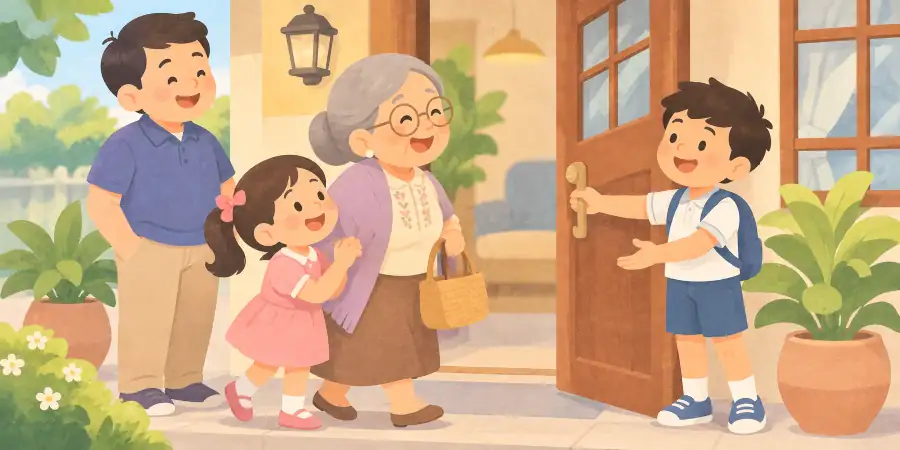
- Teach gallantry on purpose. Opening doors, carrying the heavy bags, greeting elders properly, giving up his seat, protecting his sister. Good manners are the daily training ground of a gentleman.
- Guard the screen. Many of the loudest voices teaching boys about manhood online are selling anger and contempt. Know what your son watches, and fill the gap with real men he can look up to: a coach, a pastor, a teacher, an uncle.
- Name the man he is becoming. When he is brave, kind, or responsible, say so: "That was what a man does." Boys tend to grow into the words their fathers speak over them.
A word for mothers
If you are raising a son without his father, you are not failing him. Look for good men around you (a grandfather, a coach, a teacher, a pastor) and invite them into your son's life. And at home, honor his growing strength. Let him help, let him protect, and thank him when he does.
How Eastbridge helps
At Eastbridge, we believe boys and girls are equally precious and equally capable, and that each needs to be understood. That is why we do not settle for keeping boys quiet. We want to form them.
- Clear structure and high expectations in every classroom, with teachers who are warm but firm.
- A minimal-screen school: no cellphones, tablets, or smartwatches for students.
- The Purple Vanguard in Junior High, a weekly leadership and discipline program that trains bearing, teamwork, and readiness to serve.
- The Light & Salt Society, monthly mentoring on character, leadership, and resilience.
Learn more about Eastbridge Junior High →
Raising a good man takes years, and no school can do it alone. But when home and school pull in the same direction, a boy can grow into what God made him to be: strong, and good.
Raising children with faith, love, and structure.
Visit Eastbridge, meet our teachers, and see our classes in action.
Mas gusto n'yo po bang mag-message?
Sources: Jordan B. Peterson, 12 Rules for Life (2018) and The Jordan B. Peterson Podcast, Ep. 560 (2025) · Katharine Birbalsingh, "Schools Stamped Out Masculinity. Andrew Tate Is the Result.," Strictly Education (October 29, 2026) · Katharine Birbalsingh (ed.), Battle Hymn of the Tiger Teachers (2016) and Michaela: The Power of Culture (2020) · Richard V. Reeves, Of Boys and Men (2022) · Stella O'Malley, "Fatherlessness is fueling Britain's masculinity crisis," UnHerd (April 2026) · Philippine Institute for Development Studies, Policy Note 2018-20, "Boys are still left behind in basic education."