Education Insights
When choosing a school, many parents assume that bigger means better: more facilities, more options, more opportunity. Those things are real, and they matter. But decades of research and experience point to something that matters even more than the size of a campus or an enrollment list — whether your child is truly known.
Even the most ambitious efforts to reform schools by size have taught us this. In the 2000s, the Bill & Melinda Gates Foundation invested heavily in creating smaller high schools in the United States. The results were mixed — and one of the clearest lessons was that size alone changes little. What makes the difference is what size makes possible: relationships, attention, and belonging.
Here are five things every parent should know before deciding that bigger is automatically better.
Being known changes how children learn
Research on how children learn consistently points to the same thing: students who feel a sense of belonging and have strong relationships with their teachers tend to be more engaged, more motivated, and more resilient when school gets hard. A child who knows that a teacher notices them — their effort, their struggles, their absence — behaves and learns differently from a child who feels invisible.
This matters most in the early adolescent years. On the first day of Grade 7, a child entering a very large school meets hundreds of new faces and several teachers who may not know their name for weeks. Some children thrive on that challenge. Many others quietly get lost — at exactly the age when they most need to be seen.
The question is not "How big is the school?" but "Will someone here know my child?"
Personal attention turns teaching into mentoring
When a teacher knows each student well, teaching becomes mentoring. They can tell when a child has truly mastered a lesson and when they are only memorizing it. They notice the student who needs more practice and the one who is ready for a harder problem. That kind of attention is difficult to give when a teacher is responsible for too many students to know them well.
Test scores are one measure of learning, but they are not the whole picture. What parents really want is mastery — a child who understands deeply, thinks clearly, and grows in confidence. That growth happens most naturally where the teacher knows the learner.
Every student a participant, not a spectator
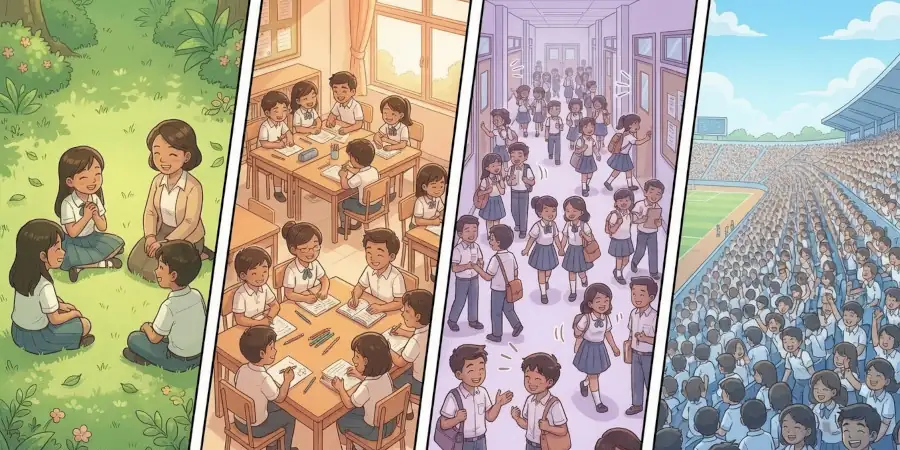
One of the best-known studies on school size, Big School, Small School by psychologists Roger Barker and Paul Gump (1964), found something surprising: large schools offered more activities, but students in smaller schools took part in more of them and held more responsible roles. In a large school, a few students lead and perform while many watch. In a smaller community, almost everyone is needed — on the team, in the program, in student government.
That matters because leadership, confidence, and responsibility are learned by doing. A child who is asked to step up, again and again, grows in ways a spectator cannot.
What matters is where the resources go
It is fair to say that larger schools can offer more facilities, and parents are right to weigh that. But facilities are only part of an education. The most important resource in any school is a good teacher with enough time for each student.
So when comparing schools, look beyond the buildings. Ask how many students are in each class. Ask whether the teachers will know your child's name — and their strengths, struggles, and gifts. Ask how the school will notice if your child begins to fall behind, or is ready to fly ahead.
Responsive teaching happens when teachers know their class
Good teaching is clear, structured, and led by the teacher. But the best teachers also respond to the class in front of them — slowing down when a concept hasn't landed, reteaching it a different way, or stretching students who are ready for more. That responsiveness depends on knowing the learners well.
A long list of elective courses is not the same as a responsive education. What helps a child grow is a teacher who sees how they are learning today and adjusts tomorrow's lesson accordingly.
It was never really about size
Large schools are not bad, and many children do well in them. But size is not the same as quality, and bigger is not automatically better. The question that matters most is whether the environment surrounding your child is built to know them, grow them, and send them forward ready.
When you visit any school, look for that. Look for teachers who know their students. Look for classrooms where every child takes part. Look for a community where your child will be seen — not as a number, but as a person.
What this looks like at Eastbridge
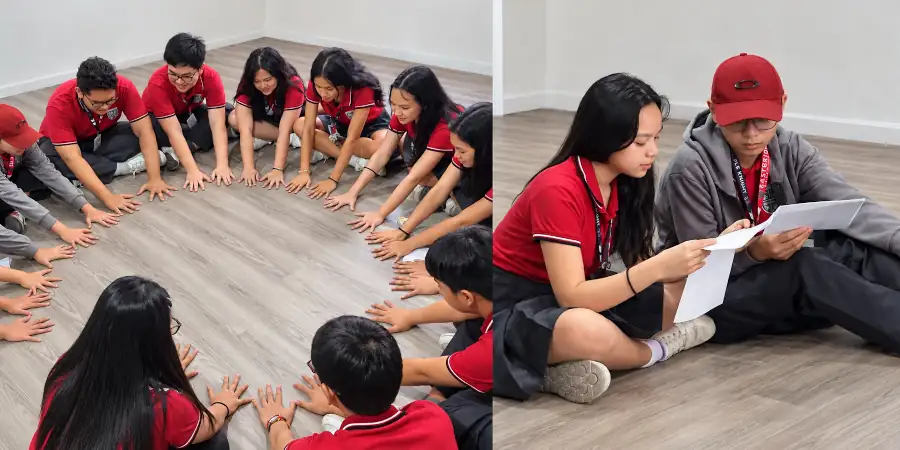
- Small classes — a maximum of 30, and most have fewer than 25, so every child is known by name
- Teachers as mentors who know each student's temperament, strengths, and gifts
- Every student a participant — through Student Government, clubs, competitions, and service
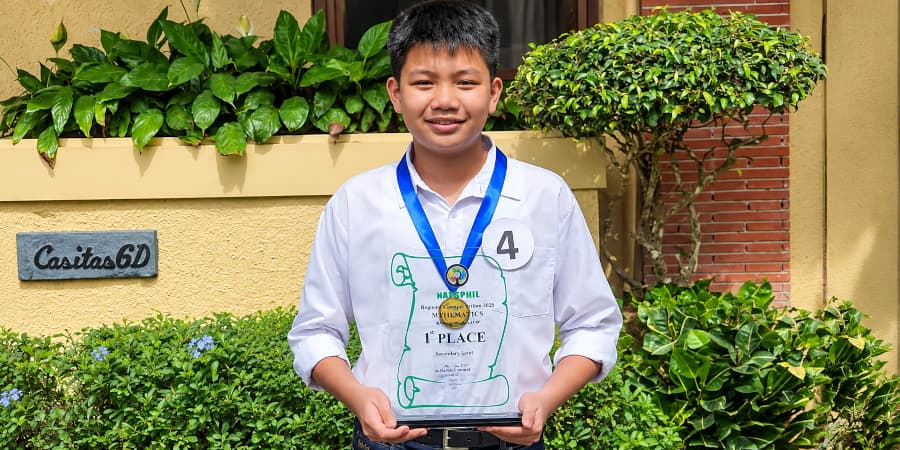
- Proven preparation — graduates admitted to Philippine Science High School, Ateneo, Miriam, UST, and more
See what it means to be known by name.
Visit Eastbridge, meet our teachers, and see our classes in action.
Schedule a campus visitMas gusto n'yo po bang mag-message?
Send us a message