Last week, many of the high school boys in our Light and Salt Society class could not read what was written on the board, in a room of only 26 square meters and the farthest seating to the board is a mere 5 meters. What is happening to our children's eyes? Here is what careful research says, and what parents can do starting this week.
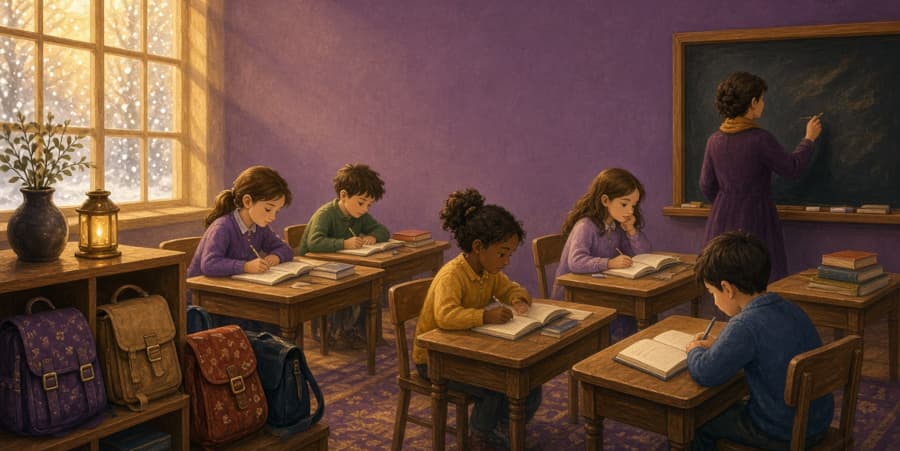
Last week, I taught a class of 11 high school boys. I wrote a few sentences on the board and asked them to read aloud. Most of them squinted and leaned forward. Then one of them said it:
"...hindi po namin mabasa."
The room is only about 24 square meters. I didn't believe it at first, so I walked to the very back of the room. From there, I could read every word easily.
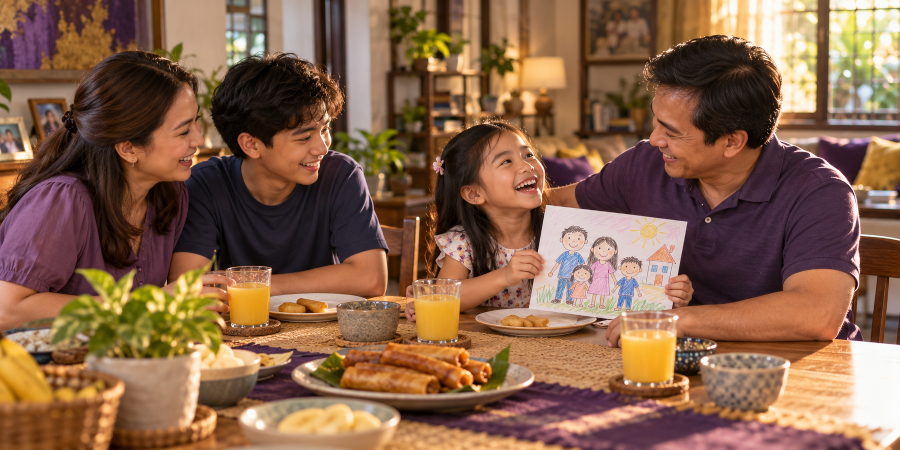
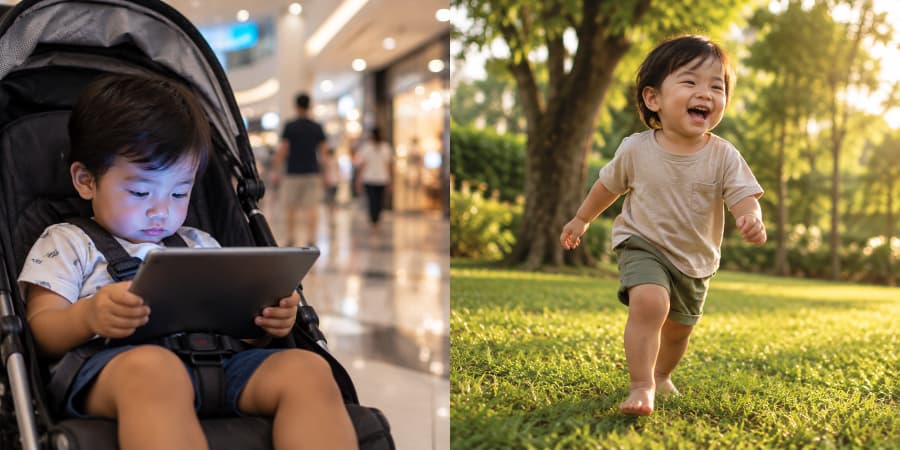
That moment stayed with me. At the mall, I see toddlers in strollers staring at phones. I see whole families at dinner with their eyes on their screens. Is there a connection? Here is what careful research says.
Our children's eyesight is getting worse
This is happening here in the Philippines, not only abroad. The 2018 Philippine Eye Disease Study found that 9% of kindergarten children had visual impairment. By high school, that number doubled to 16%, and 90% of those cases were myopia.
Myopia, or nearsightedness, means a child sees near things clearly but far things, like the classroom board, look blurry.
More screen time, more risk
In 2025, researchers in Korea combined the results of 34 earlier studies covering nearly 315,000 participants. They found that myopia risk rose sharply between 1 and 4 hours of daily screen use. Each extra hour of screen time per day was linked to about 21% higher odds of myopia.
Why would this happen? When a child stares at a screen up close for hours, the eyes work hard at a short distance. At the same time, that child is indoors, away from daylight.
These studies show that screen use and myopia go together. They do not prove that screens are the only cause. Genes and a lot of close-up reading also play a part. But screen time is one factor that parents can control.
The good news: sunlight helps protect the eyes
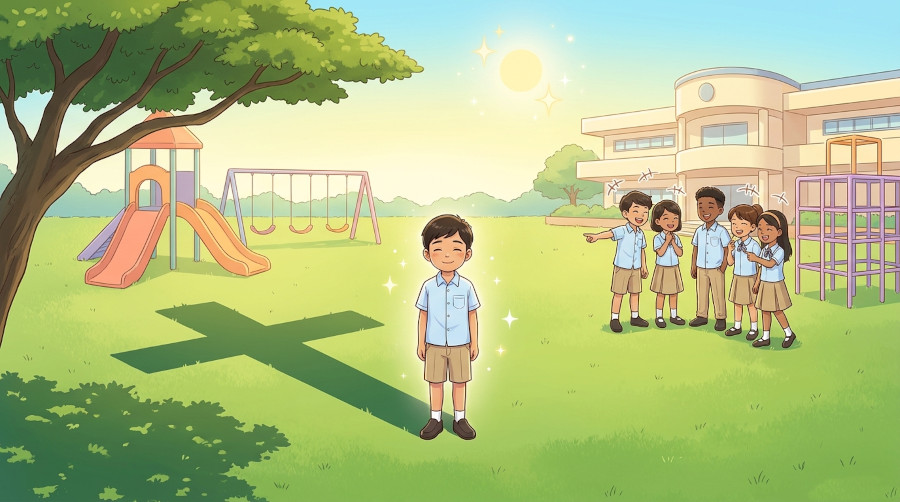
This part is hopeful, and it's free. In a 3-year study in Guangzhou, China, first graders given just 40 extra minutes of outdoor activity at school developed less myopia: 30.4% compared with 39.5%. A larger study in Shanghai found that about 2 to 2½ hours outdoors each day clearly lowered the risk. Both the length of time outside and the brightness of the light mattered.
It doesn't have to be sports. Walking, playing in the yard, or helping water the plants all count.
It's not only the eyes
For babies and toddlers: A Singapore study followed children from infancy to age 9. At 12 months old, the children averaged about 2 hours of screen time a day. Babies who had more screen time at that age showed weaker attention and self-control at age 9. These are the skills a child needs to focus in class and follow instructions.
For preteens: A 2025 study from the Children's Hospital of Philadelphia looked at over 10,000 American children. Compared with 12-year-olds who had no smartphone, those who owned one had 30% higher odds of depression, 40% higher odds of obesity, and 60% higher odds of not getting enough sleep. The lead researcher stressed that the study shows a link, not proof of cause, but it adds to a growing body of evidence.
What the experts recommend for little ones
The World Health Organization gives these guidelines for children under 5:
- Babies under 1: no screen time, and no more than one hour at a time strapped in a stroller or high chair.
- 1-year-olds: no screen time spent sitting and watching.
- 2- to 4-year-olds: no more than one hour a day. Less is better.
That means the toddler in the stroller at the mall shouldn't be watching a tablet at all.
What parents can do starting this week
- Have your child's eyes checked, even if they haven't complained. Many children don't realize they see poorly because they think everyone sees the way they do.
- Watch for the signs. These include squinting at the board or TV, sitting very close to screens, holding the phone near the face, frequent headaches, or copying from a seatmate's notebook.
- Get them outside every day. Aim for about 2 hours of daylight, spread across the day.
- Try the "20-20-20" habit. Eye doctors commonly recommend this: after every 20 minutes of close-up work, look at something about 20 feet away for 20 seconds.
- No screens in the bedroom or at the dinner table. Sleep and family conversation are too precious to lose.
- Think carefully about the first smartphone. There's no magic age, but the research gives good reasons not to rush it.
Where we stand at Eastbridge
Our campus has been smartphone- and smartwatch-free since smartphones first appeared, and we intend to keep it that way through Grade 10. We do use technology, but only as a tool our teachers direct during lessons, never in students' pockets.
A school can only protect a child's eyes and mind for part of the day. The rest happens at home. That's why we see parents as our partners, not our audience.
"The eye is the lamp of the body." (Matthew 6:22)
Jesus spoke these words about spiritual focus, but they remind us to take care of every gift God has entrusted to our children.
Have questions about how we handle technology at Eastbridge?
Come see our smartphone-free classrooms for yourself, or send us a message. We'd be glad to talk.
Schedule a campus visitSend us a messageSources
- Ha A, et al. Digital Screen Time and Myopia: A Systematic Review and Dose-Response Meta-Analysis. JAMA Network Open, 2025. PubMed
- He M, et al. Effect of Time Spent Outdoors at School on the Development of Myopia Among Children in China (Guangzhou trial). JAMA, 2015.
- He X, et al. Time Outdoors in Reducing Myopia: A School-Based Cluster Randomized Trial (Shanghai). Ophthalmology, 2022. PubMed
- University of the Philippines Manila. Highlight on visual impairment among Filipino children (2018 Philippine Eye Disease Study). UP Manila
- Law EC, et al. Associations Between Infant Screen Use, Electroencephalography Markers, and Cognitive Outcomes (GUSTO study). JAMA Pediatrics, 2023. PubMed
- Barzilay R, et al. Smartphone Ownership, Age of Smartphone Acquisition, and Health Outcomes in Early Adolescence. Pediatrics, 2025. Pediatrics
- World Health Organization. Guidelines on Physical Activity, Sedentary Behaviour and Sleep for Children Under 5 Years of Age, 2019.