Every child is intelligent — but not every child is intelligent the same way. Here is how Eastbridge recognizes nine kinds of smart, including one most schools never name.
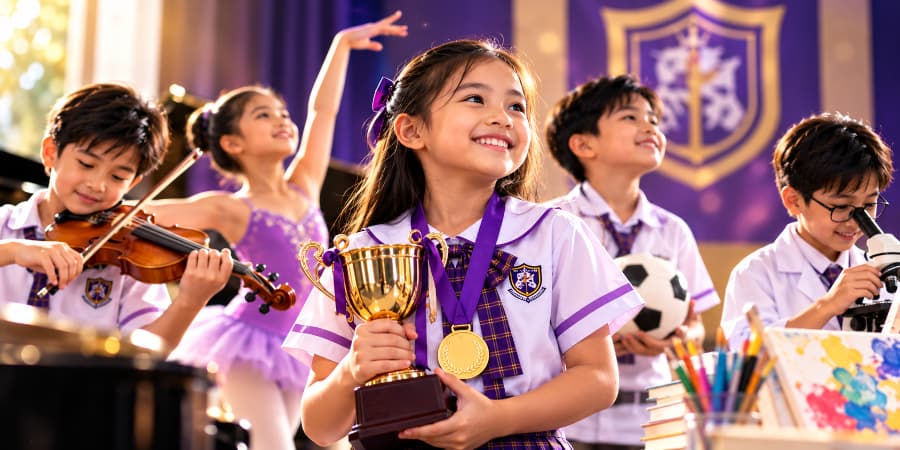
Since 2006, Eastbridge has built its curriculum on Howard Gardner's Multiple Intelligences theory — the first school in Montalban to do so. Gardner's insight was simple and liberating: intelligence is not one number. A child who struggles with long division but choreographs a dance in an afternoon is not "less intelligent" — she is intelligent differently. We recognize nine intelligences, adding Spiritual to Gardner's eight, and we give recognition awards in each one — not only for academic rank. Here is what each intelligence looks like in your child.
1. Linguistic — Good with Words
This is the child who talks early and never stops, who retells a story with every detail intact, who wins arguments you didn't know you were having. Word-smart children love being read to, invent rhymes, and remember song lyrics after one hearing. In school, this intelligence shows up in reading, writing, storytelling, and debate. Left unrecognized, a talkative child gets labeled "madaldal"; recognized, that same child becomes a writer, a speaker, a leader who can move people with words. We nurture linguistic intelligence through communicative literacy — and we honor it with recognition awards, so a child who shines in language knows their gift has a name and a future.
2. Logical-Mathematical — Good with Numbers and Reasoning
This child asks "why" until you run out of answers. They sort toys by size and color, spot patterns everywhere, love puzzles, and want rules to make sense. Number-smart children think in steps and sequences — if this, then that. This is the intelligence traditional schooling rewards most, but it is still often taught poorly: memorized procedures instead of real understanding. Our mastery-based Singapore Math approach is built for exactly this mind — concrete before pictorial before abstract — so reasoning develops instead of rote. And for the child whose logical gift shows up in chess moves or science questions rather than seatwork, the recognition award tells them: we see how your mind works, and it is excellent.
3. Spatial — Good with Pictures and Space
This is the child who draws on every available surface, builds elaborate structures from blocks, remembers the way to Lola's house after one trip, and can tell you exactly where a missing toy was last seen. Picture-smart children think in images: they understand a diagram faster than a paragraph and often doodle in order to listen. This intelligence powers artists, architects, engineers, and surgeons — yet in a text-heavy classroom it can go completely uncelebrated. At Eastbridge we make room for it: visual projects, art, design work, and maps and models across subjects. When a spatially gifted child receives an award for the intelligence they actually have, something changes in how they carry themselves — and how they learn everything else.
4. Musical — Good with Music and Rhythm
This child hums while working, taps rhythms on the dinner table, learns anything faster when it is sung, and notices when a note is sabit before anyone else does. Music-smart children feel patterns of sound and rhythm the way other children feel numbers or words — it is a genuine way of thinking, not just a hobby. Filipino families know this intelligence well; our homes are full of it. In school, it shows up in choir, in performances, and in the child who memorizes lessons by turning them into chants. At Eastbridge, musical intelligence has a stage: our Performing Arts Club, school programs, and competition pieces — and its own recognition award. A child honored for musical intelligence learns early that their gift is not "extra-curricular." It is intelligence, and it counts.
5. Bodily-Kinesthetic — Good with Movement and Hands-On
This is the child who cannot sit still — and was never meant to. They learn by doing: taking things apart, building, dancing, playing sport, mastering any physical skill startlingly fast. Body-smart children think through their hands and feet; forcing them to learn only while seated is like forcing a linguistic child to learn without words. Unrecognized, they collect labels like "makulit" or "hyperactive." Recognized, they become athletes, dancers, craftsmen, surgeons, engineers. At Eastbridge this intelligence trains in taekwondo, dance, sports, and hands-on projects across subjects — and our competition record in these arenas shows what happens when it is taken seriously. The recognition award tells the mover: your body is not the problem. It is the gift.
6. Interpersonal — Good with People and Teamwork
This child reads the room before reading the board. They know when a classmate is sad before the teacher does, naturally organize the group, make peace between quarreling friends, and somehow know exactly what to say. People-smart children understand others — their moods, motivations, and needs — and this is real intelligence, not just "being friendly." It is the raw material of leaders, teachers, counselors, and pastors. In a small school where every child is known, this gift gets noticed and given responsibility: group leadership, peer mentoring, student organizations like the Purple Vanguard. The recognition award matters especially here, because report cards rarely have a line for "brought the shy new student into the barkada." Ours, in effect, does.
7. Intrapersonal — Good with Self and Reflection
This is the quiet one — and the depth is real. Self-smart children know what they feel and why, set their own goals, prefer working alone, and think before speaking (sometimes long before). In a noisy world this intelligence is easy to miss and easier to misread as shyness or aloofness. But self-knowledge is the intelligence that steers all the others: the child who understands their own mind studies better, chooses friends more wisely, and weathers adolescence more steadily. At Eastbridge, reflection is taught on purpose — journaling, self-assessment, quiet work — and the intrapersonal child is never punished for needing silence to think. Their recognition award says what the world rarely does: knowing yourself deeply is a gift, and we saw it in you.
8. Naturalist — Good with Nature and the Environment
This child collects rocks, rescues insects, knows every dog in the neighborhood by name, and can tell you which plant is which when the adults cannot. Nature-smart children observe, classify, and connect with the living world — the intelligence of farmers, scientists, doctors, and environmental stewards. Here in Rodriguez, at the foot of the Sierra Madre, this intelligence has a home advantage: creation is our neighbor. Eastbridge brings learning outdoors — gardening, nature walks, environmental projects, field trips — and treats care for creation as both science and stewardship. The naturalist child's recognition award honors a way of seeing that the concrete city forgets: the one who notices what God made, notices what others miss.
9. Spiritual — Good with Faith and Meaning
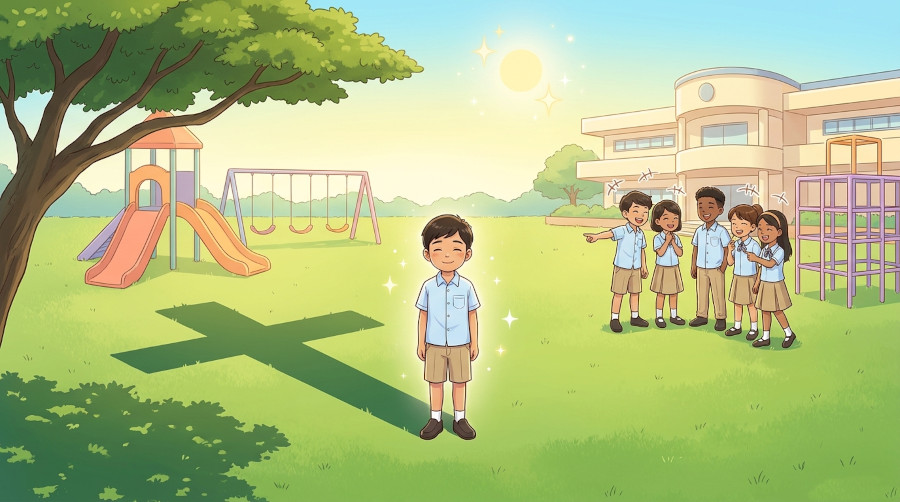
Gardner named eight intelligences and famously weighed a ninth — existential intelligence, the capacity for life's big questions — but left it out of his list. Eastbridge made a different decision. We recognize Spiritual intelligence: the child who asks where Heaven is, who prays for a sick classmate unprompted, who senses right and wrong keenly, who wonders about God with complete seriousness. In a Christian school, this is not a footnote — it is the intelligence that gives all the others their purpose. We nurture it through Bible classes, devotionals, worship, and the daily example of teachers who believe what they teach. And yes, it has its own recognition award — because a child who is growing in faith and meaning is growing in something worth naming.
Nine Ways of Being Bright
No child has all nine in equal measure — and no child has none. The question we ask at Eastbridge is never "how intelligent is this child?" but "how is this child intelligent?" It changes what we teach, how we teach it, and what we celebrate on stage at Recognition Day. If you would like to see how this looks in an actual classroom — come visit us. Bring your child. We would love to discover which intelligences light up first.