
The king was distressed, but because of his oaths and his dinner guests, he ordered that her request be granted and had John beheaded in the prison (Mat 14:9-10 NIV).
Have you ever woken up to news so shocking that your breakfast turned cold in front of you? That was the kind of morning the disciples had when they heard what happened to John the Baptizer. Word spread through the hills like wildfire during a dry summer—the crazy, wonderful, truth-telling prophet who ate locusts and wild honey, the man who pointed everyone to Jesus, had been beheaded in a prison cell at the whim of a dancing girl. Matthew tells us that when Jesus heard it, He withdrew to a solitary place. Even the Son of God needed a moment to breathe. The disciples must have looked at each other with hollow eyes, remembering John’s camel-hair clothes and thunderous voice. If this could happen to a man like John, what hope was there for the rest of them? The ground beneath their sandaled feet suddenly felt very thin.
When Herod Antipas arrested John, he was simply exercising the rules of how the world works. Powerful men protect their pride, and John had publicly declared that Herod’s marriage to his brother’s wife was unlawful. You do not embarrass a ruler and walk away unscathed. We see this same pattern everywhere—a hardworking employee gets fired because she refused to sign off on a shady transaction, a student is bullied for not joining the cheating ring, a small business owner loses a contract for refusing to pay under-the-table fees. The world has rules, and those rules apply to most people most of the time. The powerful flex, the principled suffer, and onlookers learn to keep their mouths shut. This is not cynicism; this is simply observing how things function in a broken system.
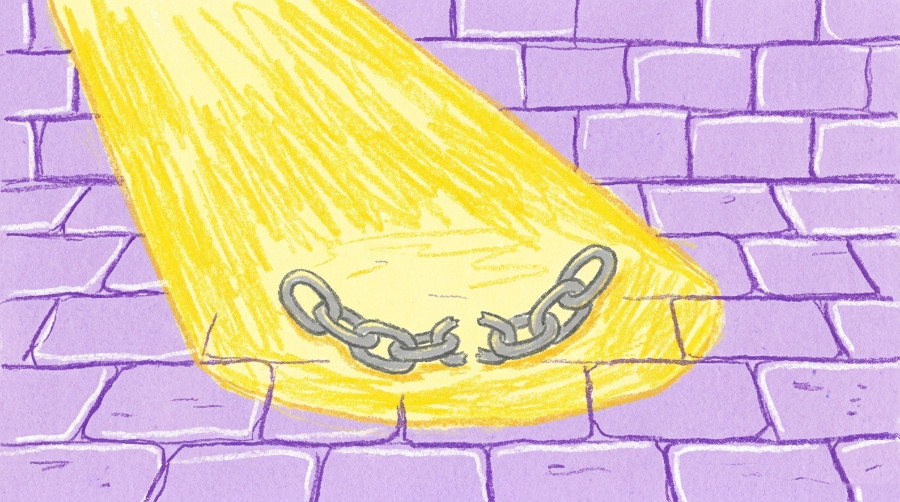
Yet the Bible gives us glimpses of something far more hopeful: God steps in at specific points to alter the course of events. In Genesis 20, God appeared to Abimelech in a dream and warned him not to touch Sarah, Abraham’s wife. The king’s mind was divinely redirected so that he returned Sarah untouched and even gave Abraham gifts. Another example is found in Acts 12, where Peter sat in prison awaiting execution while the church prayed earnestly. An angel appeared, struck Peter’s side, and his chains fell off. Herod’s plans to kill Peter were completely arrested because God had different intentions. These interventions remind us that while God does not always stop every tragedy, He is never powerless to do so. He works selectively, and even the world’s seemingly uncontrollable forces—a king’s lust, a government’s decree, a corrupt official’s signature—cannot tie His hands permanently.
Jesus never sugarcoated what His followers should expect. He told His disciples plainly, “If the world hates you, keep in mind that it hated me first.” If they called the master Beelzebul, how much more the members of His household? We cannot expect better treatment than Jesus received, and looking at the global church today confirms this. In various parts of the world, believers lose their jobs, their freedom, and sometimes their lives simply because they name the name of Christ. Young girls are stolen from their homes and forced into unspeakable situations, echoing the brutality of Herod’s banquet hall where a teenager became both dancer and executioner. John’s head on a platter is not ancient history; it replays in different forms whenever the powerful decide that righteousness is inconvenient.
This brings us to a hard but necessary truth: the happy ending we long for is not guaranteed in this lifetime. We are pilgrims passing through, not permanent residents building mansions here. The apostle Peter called believers “foreigners and exiles,” and that identity shapes how we process injustice. Console one another with this reminder—God is not remiss in fulfilling His promise. The fulfillment may simply be reserved for heaven, where every wrong will be righted and every tear wiped away. Do not exhaust yourself trying to make perfect sense of this world unless you recognize that it is a broken thing, a beautiful but shattered mirror reflecting only fragments of what it was meant to be. Until the Lord returns to fully mend what sin has ruined, things may continue or even worsen. But take heart: the darkness is deepest just before dawn.


